Muslim Girl and Boy Bluework: A Designer’s Review
As an embroidery designer who has spent countless weekends behind a craft fair table, I know that not every machine embroidery design is created equal. Some designs look beautiful on a screen but fail to capture attention in a busy marketplace. Today, I am reviewing the Muslim Girl and Boy Bluework design to determine its viability for your next handmade collection. This piece falls under the Religion category, offering a respectful and charming representation suitable for a wide audience of Muslim families and allies.
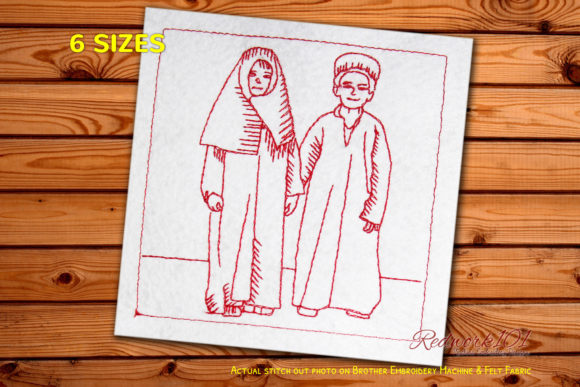
The product description notes this as a "Muslim Girl and Boy redwork embroidery," yet the title specifies Bluework. This duality suggests versatility. In my experience, designs labeled with optional box stitches or variable outer colors require careful planning. The note that "The Box Stitch shown in the picture is optional" is crucial. It means you, the maker, have control over the final framing of the artwork. This flexibility is a significant advantage for creating a cohesive handmade product line.
First Impressions and Visual Appeal
When I first loaded the digital embroidery file into my software, the immediate impression was one of simplicity and charm. The silhouette style typical of redwork or bluework lends itself to a clean, modern aesthetic. It does not feel overly ornate or cluttered. Instead, it strikes a balance between traditional values and contemporary design trends. For a craft fair booth, this is vital. Customers walking by need to understand the design at a glance. Complex, dense designs often get lost from a distance, but the clear lines of this Muslim Girl and Boy Bluework design stand out.
The visual appeal here lies in its potential for contrast. If you choose a crisp white thread on a navy tote bag, the design pops with elegance. If you opt for a soft pastel blue on a cream linen apron, it feels soft and inviting. This adaptability allows you to target different customer segments, from those seeking premium, elegant gifts to parents looking for cute, everyday items for their children.
Product Applications for Craft Fairs
To maximize sales, you must place the design on the right substrate. Based on the scale and style, here is how I would deploy this design in a real-world market scenario:
- Tote Bags and Market Bags: This is arguably the best application. A large tote bag design featuring the boy and girl figures creates an instant statement piece. Parents love personalized or culturally relevant bags for school or grocery runs. The flat surface of a canvas tote ensures the stitching remains flat and visible.
- Tea Towels and Kitchen Linens: Tea towel embroidery is a staple of handmade markets. However, you must be cautious with fabric texture. A waffle-weave towel might distort the fine lines of the bluework. Stick to smooth cotton or linen blends to maintain clarity.
- Aprons: An apron embroidery placement on the bib or lower pocket adds a touch of warmth. This appeals to customers looking for housewarming gifts or Ramadan decor.
- Embroidered Patches: If the design scales down well, turning it into an embroidered patch allows customers to add it to jackets, backpacks, or hijabs. This expands your product range without requiring new digitizing.
- Caps and Hats: Be careful here. Curved cap surfaces can distort wide designs. If you use this on a cap, ensure the width fits within the front panel without wrapping around the sides. Use a stiff stabilizer to prevent puckering.
Production Practicalities and Technical Notes
From a production standpoint, efficiency is key. You cannot spend hours hooping and trimming if you want to make a profit at a craft fair product price point. The description mentions that the outer box color varies unless part of the design itself. This implies you should treat the box as a separate element or omit it entirely for a cleaner look. Omitting the box reduces stitch count and production time, making it a better candidate for batch production.
However, there are careful-use notes to consider. Since this is likely a single-color or two-color design, thread colors are critical. You must ensure high contrast between the thread and the fabric. A low-contrast combination will make the design disappear, reducing its perceived value. Additionally, check the stitch density. If the design is too dense for lightweight fabrics like voile or thin cotton, it will pucker. Always test on scrap fabric first.
Another technical consideration is the hoop size. Without exact dimensions provided in the description, you must verify the file specifications before purchasing or producing. Ensure the design fits your standard hoops (e.g., 5x7 or 6x10) to avoid constant re-hooping, which slows down your workflow. For dark fabrics, consider using a water-soluble topping to prevent the fabric from sinking into the stitches, which can obscure the details of the girl and boy figures.
Marketing and Online Presence
For the Etsy seller or online boutique owner, photography is everything. The clean lines of Muslim Girl and Boy Bluework photograph exceptionally well. Create a printable mockup to visualize the design on various products before you stitch a single thread. This helps in planning your inventory mix.
When listing these items, emphasize the cultural significance and the handmade quality. Use terms like "modest fashion accessories," "Islamic gift ideas," and "custom embroidery." Highlight that the design is versatile—suitable for both boys and girls, which broadens your customer base. If you are selling the design assets themselves rather than finished goods, clarify the commercial licensing terms. The prompt advises checking license details, so ensure you have explicit permission for commercial embroidery sales if you are buying the file from a third party.
Designer’s Verdict: Does It Sell?
In my professional opinion, Muslim Girl and Boy Bluework is a strong contender for a spring or holiday market lineup. Its strength lies in its emotional connection and aesthetic flexibility. It is not just a decoration; it is a representation of identity and faith, which adds intrinsic value to the finished product.
To succeed, focus on consistency. Use the same thread palette across your booth to create a branded look. If you choose bluework, stick to varying shades of blue and white. This creates a cohesive display that looks professional and curated. Compare fabric colors side-by-side to ensure the design remains legible on all items. A confused display sells less than a focused one.
Finally, remember that small shop product success comes from attention to detail. Inspect every hoop for loose threads. Use the right stabilizer to ensure the item survives washing. When customers see a high-quality, durable embroidered item, they are more likely to pay a premium price. This design, when executed with care, can become a signature piece in your portfolio, driving repeat business and positive word-of-mouth among your community.
Before you commit to a large batch, stitch out one sample on each type of fabric you plan to use. Check the spacing, confirm the clarity of the faces and clothing details, and ensure the optional box stitch complements rather than overwhelms the central figures. With these steps, Muslim Girl and Boy Bluework can be a profitable and meaningful addition to your embroidery business.