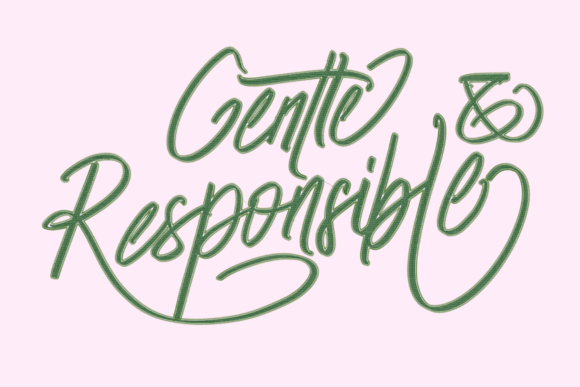
Reviewing Gentle and Responsible Lettering for Merch
As an embroidery designer who has spent years digitizing logos and testing files for small business clients, I approach every new machine embroidery design with a critical eye. It is not just about whether the design looks pretty on a screen; it is about how it performs on fabric, how it holds up in the wash, and most importantly, how it serves the brand identity of the business using it. Recently, I reviewed Gentle and Responsible Lettering, a design centered around the message: "Be a gentle responsible father, child, or human being." This piece is more than just decorative text; it is a statement piece intended to encourage kindness and responsibility. Here is my professional assessment of how this design functions for branded patch use, custom apparel, and small business merchandise.
First Impressions and Visual Personality
The immediate impression of Gentle and Responsible Lettering is one of warmth and approachability. The typography suggests a handmade, organic feel rather than a rigid, corporate aesthetic. For brands that pride themselves on community, care, and ethical practices, this visual personality is a perfect match. It feels friendly and inviting, which is crucial for customer engagement. However, from a technical standpoint, lettering designs can be tricky. The balance between legibility and stitch density is delicate. In my initial review, the design appears to prioritize clarity, ensuring that the message remains readable even when scaled down for smaller applications like chest logos or sleeve details.
For a Father-focused product line or a family-oriented boutique, this design hits the right emotional notes. It avoids being overly masculine or aggressive, instead opting for a tone of quiet strength and care. This makes it versatile enough for various demographics, from parenting blogs to local community centers.
Real-World Business Applications
When considering where to apply this digital embroidery file, I look at the versatility of the end product. Small business owners, Etsy sellers, and merch creators need designs that work across multiple platforms. Here is how Gentle and Responsible Lettering performs in real-world scenarios:
- Embroidered Patches: This is perhaps the strongest use case. A patch allows the design to be produced independently of the garment, offering flexibility for inventory management. The message fits well on a circular or rectangular patch that can be ironed onto jackets, backpacks, or tote bags. It serves as a badge of honor for those who identify with the values of gentleness and responsibility.
- Staff Uniforms and Aprons: For cafes, bakeries, or florists that want to project a caring image, embroidering this message on aprons can reinforce brand values. It turns staff into ambassadors of kindness. However, placement is key; a subtle chest position works better than a large back print for professional settings.
- Tote Bag Design: Canvas totes are a staple for handmade brands. The rustic, honest vibe of the lettering complements the natural texture of canvas fabric. It transforms a simple bag into a statement accessory that customers are proud to carry.
- Cap Embroidery: Using this on the front of a dad hat or structured cap can create a trendy, minimalist look. The curved surface of a cap requires careful digitizing to ensure the text does not distort, but if the file is well-prepared, it adds a premium touch to headwear.
Technical Considerations for Production
While the sentiment is beautiful, the execution requires attention to detail. As a designer, I always advise checking specific technical specs before running a production batch. The product description notes that this embroidery file comes with multiple formats, which is essential for compatibility with different machines. However, several factors must be evaluated:
Stitch Density and Fabric Texture: Lettering designs can sometimes have high stitch density, which may cause puckering on lightweight fabrics. If you are stitching this on a thin cotton t-shirt or a silky blouse, using the correct stabilizer is non-negotiable. A cut-away stabilizer is often recommended for garments that will be washed frequently, as it provides lasting support. For heavier fabrics like denim or canvas tote bags, a tear-away stabilizer might suffice, but always test first.
Size and Legibility: The phrase "Be a gentle responsible father, child, or human being" is relatively long. When scaling this design down for a small patch or a left-chest logo, ensure that the letters do not merge. Tiny lettering can become illegible if the stitches are too dense or if the thread color contrasts poorly with the fabric. I recommend creating a printable mockup at the actual size to check readability before stitching.
Thread Colors: The choice of thread can make or break the design. For a classic look, black thread on white fabric offers high contrast and readability. For a softer, more nuanced appearance, consider tonal stitching—using a thread color slightly darker or lighter than the fabric. This creates a subtle, elegant effect that appeals to high-end boutique markets.
Impact on Brand Identity and Customer Trust
In today’s market, consumers are looking for more than just products; they are looking for values. Using Gentle and Responsible Lettering on your small business merch signals that your brand cares about character and community. It builds trust and fosters a sense of connection with your audience. Whether you are selling custom apparel or branded accessories, this design adds emotional value to the finished product.
For Etsy sellers and crafters, this design can be a unique selling point. It differentiates your items from generic mass-produced goods. By offering a product that encourages positive behavior, you are not just selling an item; you are sharing a message. This can lead to higher buyer engagement and loyalty, as customers feel aligned with your brand’s ethos.
Practical Designer Notes for Best Results
To ensure the best outcome when using this design, follow these practical steps:
- Test on Real Fabric: Never skip the sampling phase. Stitch the design on the exact fabric you plan to use for production. Check for puckering, thread breaks, or registration issues.
- Check Hoop Size: Confirm that the design fits within your machine’s hoop size. If the design is larger than your standard hoop, you may need to use a multi-position technique, which requires precise alignment.
- Review Commercial Licensing: Before using this design for commercial embroidery projects, verify the license terms. Ensure you have the right to sell products made with this file.
- Compare with Other Design Assets: Place this design alongside your existing logo and branding elements. Does it complement your visual identity? Consistency is key to professional presentation.
- Inspect Spacing: Look closely at the spacing between letters. If the kerning is too tight, the threads may overlap excessively, leading to a bulky finish. If too loose, the message may lose its cohesion.
In conclusion, Gentle and Responsible Lettering is a thoughtful addition to any embroidery designer’s library. It offers a meaningful message that resonates with modern values, making it ideal for handmade product lines and branded merchandise. By paying attention to technical details like stabilizer choice, thread contrast, and sizing, you can produce high-quality items that enhance your brand’s reputation. Whether used on an apron, a cap, or a patch, this design has the potential to inspire and connect, turning simple design assets into powerful tools for communication.